Lab report extraction for a UK water consultancy
They were manually entering lab results from 10+ PDF formats into spreadsheets every morning. I built the extraction pipeline that replaced it, and it's been running for two years.
What changed
The situation
A UK water consultancy receives lab analysis results as PDF reports from multiple testing laboratories. Each lab uses a different format, over 10 distinct layouts, and the templates drift over time without warning.
Every morning, someone on the team opened each PDF, read the tables, and typed the results into their own Excel templates. Slow, error-prone, and completely dependent on one person knowing which numbers went where.
They’d tried an extraction script before I got involved. It worked for one lab’s format. It broke the moment another lab changed their template.
Why it’s hard
Lab A puts test results in a vertical table. Lab B uses a horizontal layout. Lab C splits results across two pages. A script built for one format fails on the others.
Naming is inconsistent too. What one lab calls “Total Hardness,” another labels “Hardness (as CaCO₃).” You can’t match on field names alone.
And labs update their report templates without telling anyone. A pipeline that worked yesterday stops working today, and nobody knows until the data is already wrong in the spreadsheet. The previous script had no way to flag when something went wrong, so bad data passed through silently.
What I built
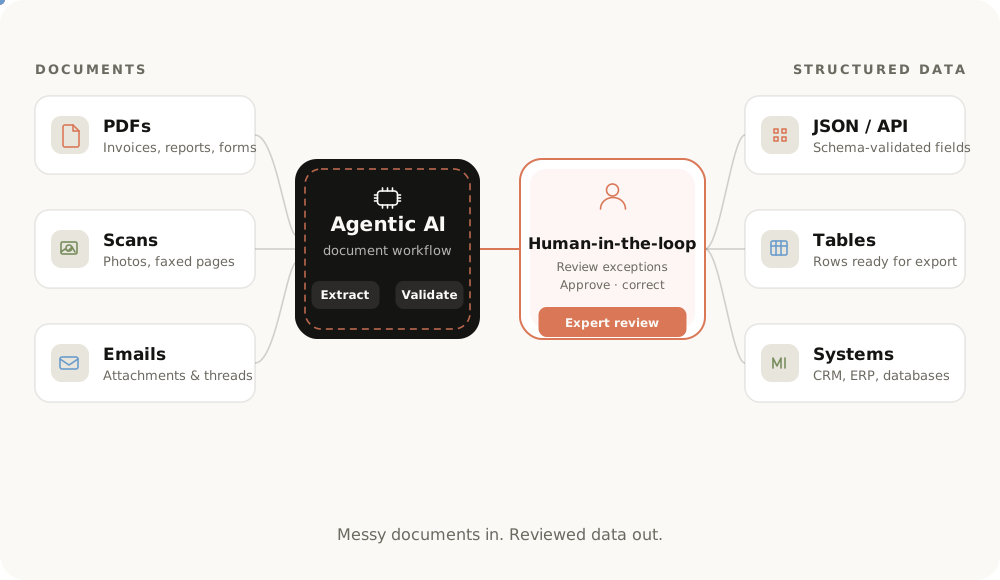
A single extraction pipeline that handles all the layout variations. I started with a Pydantic schema, defining exactly what fields to extract before writing any extraction code. Every output is validated against that schema.
For predictable fields, I used deterministic rules. LLMs only came in for fields where layout variation made rules too brittle. Every extracted field gets a confidence score, and anything low-confidence gets flagged for human review before it reaches the spreadsheet.
In year two, I added email integration. The system reads the inbox every morning, finds the lab report attachments, extracts the data, and sends structured results back. The team stopped downloading and uploading PDFs entirely.
Results
Manual data entry dropped 75% from day one. The engagement ran two years: the system became central to daily operations and expanded as new labs came on. One pipeline handles all 10+ layout variations.
From the people using it
Thanks to Subhajit's work, we are saving countless hours having to manually enter results into our own template.
He always delivers great results. His communication is clear, he takes feedback well, and he consistently finds effective solutions.
Still processing documents by hand?
Book a free 30-minute audit call. Let's figure out how much time you'd get back by automating the work.